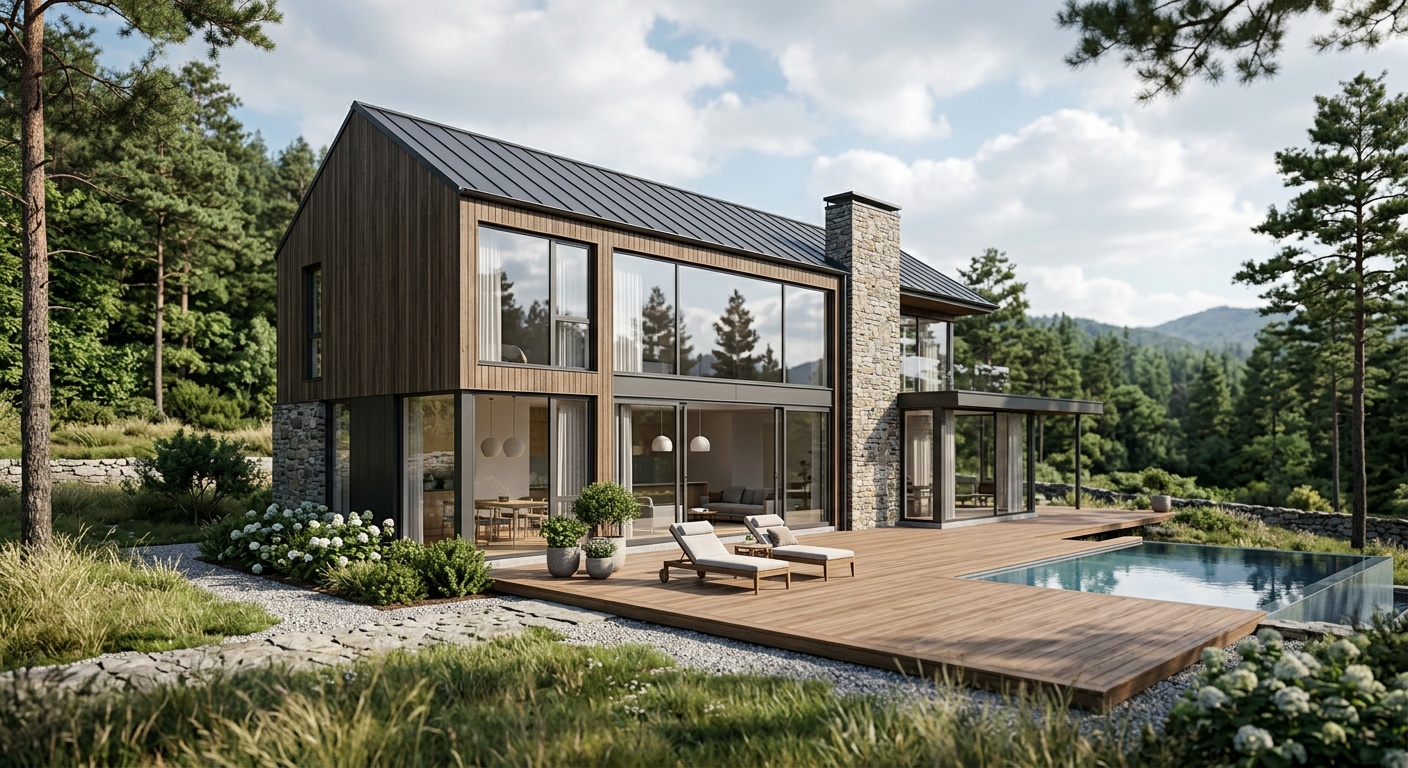
Why Real Estate Agencies Need 3D Renders in 2026
Reading time: 8 minutes
Table of Contents
- The Great Listing Shift: Why Photos Alone Fall Short
- The Economics of 3D Rendering in 2026
- Real Agencies, Real Results
- Common Challenges (And How to Solve Them)
- 3D Renders vs. Traditional Marketing: A Side-by-Side Look
- Getting Started: A Practical Roadmap
- Frequently Asked Questions
The Great Listing Shift: Why Photos Alone Fall Short
Picture this: a buyer scrolls through forty listings in ten minutes flat, thumbs moving faster than most agents can type a follow-up email. That’s the reality of house-hunting in 2026. Attention spans have compressed, but expectations have inflated. Buyers now expect to experience a property before they ever set foot inside it—and flat, static photography just doesn’t cut it anymore.
Here’s the straight talk: agencies clinging to traditional photo-only listings are quietly losing deals to competitors who’ve embraced 3D visualization. It’s not about flashy tech for its own sake. It’s about meeting buyers where their expectations already are.
Consider a pre-construction condo in a mid-sized city. Two years ago, an agency might have sold units off a floor plan and a few stock renderings. In 2026, that same agency needs interactive walkthroughs, furnished virtual staging, and even AI-assisted lighting simulations that show the unit at golden hour versus midday. Buyers want to feel the space, not just see its dimensions.
What Changed Between 2024 and 2026?
A few converging trends pushed 3D rendering from “nice-to-have” to “non-negotiable”:
- Remote and international buyers now represent a larger share of transactions, especially in urban markets—these buyers can’t always visit in person before making decisions.
- AI-powered rendering tools matured significantly, cutting turnaround time from weeks to days and reducing costs by roughly 40% compared to 2023 pricing.
- Younger buyers (Gen Z and younger Millennials) grew up with immersive digital experiences—gaming, VR, AR—and instinctively expect similar polish from real estate listings.
The Economics of 3D Rendering in 2026
Let’s address the elephant in the room: cost. Agencies often hesitate because they assume 3D renders are a luxury reserved for high-end developments. That assumption is outdated.
According to a 2026 industry survey by the National Association of Real Estate Marketers, listings featuring 3D renders or virtual staging received 68% more online engagement and sold, on average, 12 days faster than listings using photography alone. For agencies juggling holding costs, commission timelines, and client patience, that speed difference is not a marginal benefit—it’s a competitive necessity.
“We stopped thinking of 3D renders as a marketing expense and started treating them as a sales acceleration tool,” says Marta Ilves, a brokerage director in Tallinn who transitioned her agency to render-first listings in early 2025. “The upfront cost pays for itself within the first two showings we skip because buyers already know what they’re getting.”
Where the ROI Actually Comes From
The return isn’t just about aesthetics—it’s operational:
- Fewer wasted showings. Buyers pre-qualify themselves visually before booking a tour.
- Faster pre-sales. Off-plan developments can market units before construction even begins.
- Stronger negotiating position. Well-visualized listings tend to attract more competitive offers, reducing the need for price drops.
Real Agencies, Real Results
Quick Scenario: Imagine a mid-size agency in Austin handling twelve new listings a month. In 2025, they piloted 3D renders on just three properties—renovation projects where the “before” state looked unappealing in photos. Result? Those three listings generated 45% more inquiries than the other nine combined, despite similar price points and locations.
Another example: a boutique agency in Lisbon working with international investors began offering fully furnished virtual staging for empty units in 2026. Since most buyers were purchasing remotely, the agency reported a 30% increase in offers made without an in-person visit—something almost unheard of just three years earlier.
A third case worth noting: a suburban brokerage outside Toronto used 3D floor plan renders specifically to market properties with unconventional layouts. Buyers had previously struggled to mentally map awkward spaces from photos alone. After introducing renders, average days-on-market for those “hard to visualize” properties dropped from 58 days to 34 days.
The Pattern Across All Three Cases
Notice the common thread? In each scenario, 3D rendering solved a specific visualization problem—unappealing current condition, remote buyer distance, or confusing layout. That’s the real lesson: renders aren’t a blanket solution, they’re a targeted tool for removing friction from the buyer’s decision-making process.
Common Challenges (And How to Solve Them)
Well, here’s the honest part: adopting 3D rendering isn’t entirely frictionless. Let’s walk through the three challenges agencies raise most often.
Challenge 1: “It’s Too Expensive for Standard Listings”
Solution: Start with a tiered approach. Reserve full interactive walkthroughs for premium or hard-to-sell listings, and use simpler static 3D renders (often $150-$400 per property in 2026 pricing) for standard inventory. You don’t need Hollywood-level production for every home.
Challenge 2: “Our Team Doesn’t Have the Technical Skills”
Solution: Outsourcing has become remarkably accessible. Numerous specialized studios now offer 48-72 hour turnaround on standard renders, and many integrate directly with MLS platforms. You don’t need in-house 3D artists—you need a reliable vendor relationship.
Challenge 3: “Clients Are Skeptical of ‘Fake’ Visuals”
Solution: Transparency solves this quickly. Label renders clearly as “virtually staged” or “artist’s rendering,” and pair them with real photos of the actual structure. Buyers appreciate honesty far more than they penalize the use of visualization tools.
3D Renders vs. Traditional Marketing: A Side-by-Side Look
| Metric | Photography Only | 3D Renders/Staging |
|---|---|---|
| Average Days on Market | 47 days | 35 days |
| Online Engagement Rate | Baseline | +68% |
| Remote Offers (No In-Person Visit) | ~8% | ~22% |
| Cost Per Listing (Avg.) | $150-$300 | $150-$1,200 |
| Buyer Confidence Before Tour | Moderate | High |
Visualizing the Engagement Gap
Below is a simplified comparison of average online engagement scores across marketing formats, based on aggregated 2026 listing performance data.
Getting Started: A Practical Roadmap
Ready to transform your listing strategy? Here’s a straightforward path forward, whether you’re a solo agent or running a fifty-person brokerage.
Practical Roadmap
- Audit your current listings. Identify which properties are underperforming due to poor visual presentation—empty units, awkward layouts, or outdated interiors are prime candidates.
- Start small. Pilot 3D rendering on 2-3 listings before rolling it out agency-wide. Measure engagement and days-on-market against your historical baseline.
- Choose the right vendor or tool. Compare turnaround time, pricing tiers, and whether they offer MLS-compatible file formats.
- Train your team on positioning. Agents need to know how to present renders honestly and confidently to skeptical clients.
- Scale based on data, not assumptions. Once you have performance numbers from your pilot, expand the approach to listings where it delivers the clearest return.
Pro Tip: Don’t treat 3D rendering as a one-size-fits-all upgrade. The agencies seeing the strongest results in 2026 are the ones matching the right level of visualization to each property’s specific challenge.
Frequently Asked Questions
Do 3D renders actually increase sale price, or just speed up the sale?
Primarily speed, though there’s a secondary pricing effect. Faster sales reduce holding costs and often prevent the price reductions that come with properties sitting too long on the market. Data from 2026 suggests renders correlate more strongly with reduced days-on-market than with dramatically higher final sale prices.
Are 3D renders worth it for lower-priced properties, or only luxury listings?
They’re worth it across price points, though the format should scale accordingly. A $180,000 starter home doesn’t need a cinematic walkthrough—a clean static render or virtually staged photo often does the job at a fraction of the cost while still outperforming plain photography.
How long does it typically take to get 3D renders completed in 2026?
Standard turnaround has dropped significantly thanks to AI-assisted rendering pipelines. Most vendors now deliver static renders within 48-72 hours, while full interactive walkthroughs typically take 5-10 business days depending on property size and complexity.
Future-Proofing Your Listings: What Comes Next
The agencies thriving in 2026 aren’t the ones with the biggest budgets—they’re the ones treating visualization as a core part of the sales process rather than an optional add-on. As remote buying continues to grow and buyer attention spans keep shrinking, the gap between render-equipped listings and photo-only listings will likely widen further into 2027.
Here’s your quick-reference checklist before your next listing goes live:
- Identify properties that would benefit most from visual enhancement
- Get quotes from at least two rendering vendors to compare pricing and speed
- Label all rendered content transparently to maintain buyer trust
- Track days-on-market and engagement metrics to prove ROI internally
- Reassess your rendering strategy every two quarters as tools and buyer expectations evolve
So, where does your agency stand right now—still relying on photography alone, or ready to give buyers the experience they’ve already come to expect? The shift toward 3D visualization isn’t a passing trend; it’s quickly becoming the baseline for competitive real estate marketing. The only question left is how soon you’ll adapt.
About the Author
